


Professional hockey players invariably earn nicknames throughout their careers, whether they play for a short stint or multiple seasons. While many are straightforward, simply adding an ‘er’ or ‘y’ to a name (like Bryan “Rusty” Rust or Kris “Tanger” Letang of the Pittsburgh Penguins), some are far more imaginative, often accompanied by intriguing backstories. This article explores some of the most creative nicknames bestowed upon Pittsburgh Penguins players during the franchise’s 58-year history.
Nicknames From the Locker Room & Press Box
The most common origin for player nicknames is either the locker room, coined by teammates, or the press box, given by journalists. These often become indelible parts of a player’s identity throughout their time in the league.
Beau “Sunshine” Bennett
Beau Bennett, a former Penguins right winger, was frequently sidelined by injuries, yet his teammates affectionately called him “Sunshine.” This moniker didn’t stem from a cheerful personality but rather his Californian origins. It was a nod to Ronnie Bass, the T.C. Williams High School quarterback from California, famously depicted in the 2000 film Remember the Titans, whom Bennett was said to resemble.
Paul “BizNasty” Bissonnette
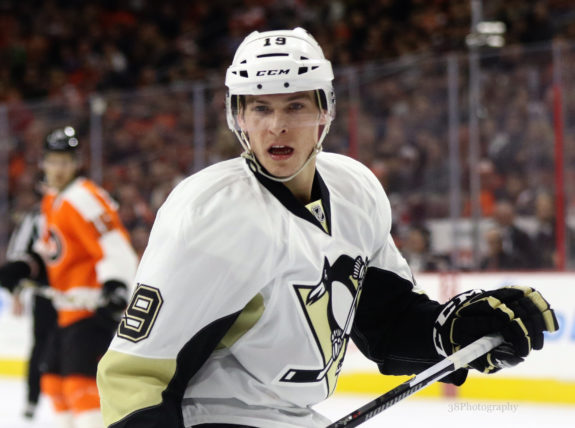
Paul Bissonnette, a former Penguins left winger, earned his “BizNasty” nickname while playing for the Wilkes-Barre Scranton Penguins, their AHL affiliate. Known for his vocal presence and willingness to fight both on the bench and the ice, he solidified a reputation for being ‘BizNasty.’ Even after retiring from professional hockey in 2017, Bissonnette continues to use this recognizable nickname across his various media ventures, including social media, his role on Barstool Sports’ Spittin’ Chiclets podcast, and his mockumentary series, BizNasty Does BC.
Nick “Rotisserie Chicken” Bjugstad
Penguins forward Nick Bjugstad likely wished his “Rotisserie Chicken” nickname had remained in Florida after his trade to Pittsburgh. He revealed its quirky origin to Sports Illustrated in 2016: One evening, intensely hungry and unable to find parking for dinner with teammates, Bjugstad spontaneously opted for a rotisserie chicken from Publix, texting his apologies. His teammates found the incident hilarious, amplifying the story on ESPN the following day. This led fans to adopt the nickname, create signs, and even throw chicken wings onto the ice during Florida Panthers games, mimicking the tradition of throwing plastic rats.
Sidney “Darryl” Crosby
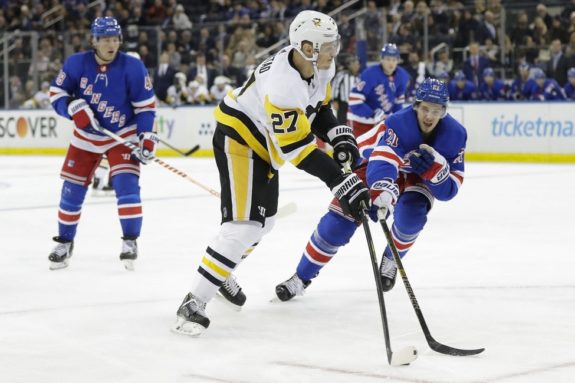
Throughout his two-decade NHL career, Sidney Crosby has accumulated numerous nicknames, some less flattering than others. A particularly distinctive one, “Darryl,” emerged during his junior hockey days. In 2005, new Penguins teammates noticed the name on his glove cuff. Crosby explained to ESPN that after scoring eight points in his first junior exhibition game, a comparison was drawn to Hall of Famer Darryl Sittler, who once scored ten points in an NHL game in 1976. The nickname “Darryl” was then adopted and persisted for several years.
Matt “Dad” Cullen
One might assume Penguins forward Matt Cullen earned the nickname “Dad” due to being a father of three hockey-enthusiastic sons. However, its true origin lies in his seniority on the team. At 42, Cullen was the oldest player, old enough to be the father of younger teammates like Jared McCann and Marcus Pettersson, both born in 1996 – the very year Cullen was drafted by the Mighty Ducks of Anaheim. This age gap made “Dad” a fitting and easily adopted moniker.
Mario “Super Mario,” “Le Magnifique,” “Ace” Lemieux
Unsurprisingly, the Pittsburgh Penguins’ greatest player, Mario Lemieux, boasts three distinct nicknames. “Super Mario,” the most straightforward, originated from the popular Nintendo video game series launched in 1985, a year after Lemieux was drafted. “Le Magnifique,” meaning “The Magnificent One” in English, celebrates his French-Canadian heritage and his legendary status as one of hockey’s all-time greats. However, “Ace” was a nickname Lemieux disliked. As reported by Dave Molinari in the Pittsburgh Post-Gazette in 2016, former coach Gene Ubriaco initiated its use, and some teammates continued it precisely because they knew it annoyed him.
Greg & Ryan “Bugsy” Malone
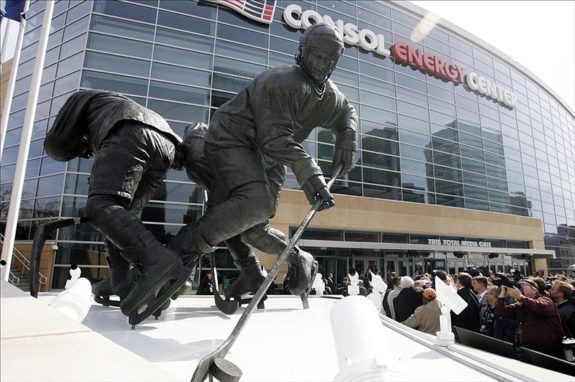
Greg and Ryan Malone, a father-son pair, both played for the Penguins, wore jersey No. 12, and shared the nickname “Bugsy.” Greg first acquired the moniker, inspired by the 1976 musical gangster comedy Bugsy Malone, released the same year he was drafted by the Penguins. Ryan subsequently inherited the nickname after joining the team in 1999.
Douglas “Crankshaft” Murray
The story behind former Penguins defenseman Douglas Murray’s nickname “Crankshaft” remains a closely guarded secret. Murray consistently declines to reveal its origins, once telling a reporter in 2013 that keeping it secret “helps the legend.” He did offer a slight hint in 2010 to the Vancouver Sun, stating it was a “long, secret story” that emerged from “a fun trip with some guys on the team” during his time at Cornell University.
James “Lazy” Neal
James Neal and Evgeni Malkin shared a dynamic relationship, characterized by mutual pranks and playful Twitter jabs. A notable incident involved Malkin tweeting that Neal was “lazy,” sparking a fan frenzy. Regarding the comment, Neal humorously told Pittsburgh Magazine, “He’s Geno. It’s a lost battle getting into it with him. He always wins because he doesn’t understand what you’re saying anyway. So I’ll let him get those jabs in if he keeps passing me the puck.”
Steven “Binky” Oleksy
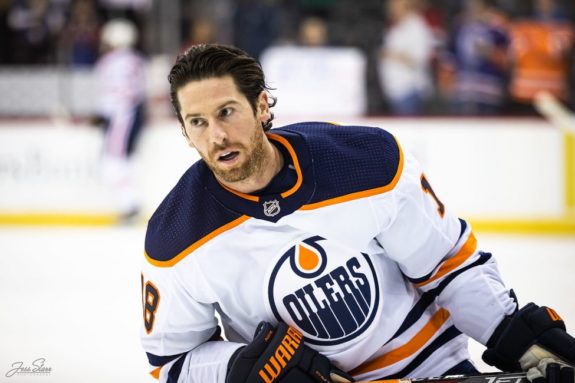
It’s surprising that former Penguins defenseman Steven Oleksy, a robust 6-foot, 194-pound player, carried the nickname “Binky” all the way to the NHL. He explained its origin in 2013: As a frequently hospitalized child, he called his pacifier a “binky.” Nurses would advise his mother to give him his “binky” when he cried, leading his mother to adopt the name, which then spread among his schoolmates and stuck with him.

Brooks “Free Candy” Orpik
The origins of former Penguins defenseman Brooks Orpik’s nickname, “Free Candy,” have been the subject of much speculation, with some theories being less appropriate. The most widely accepted explanation, however, links it to his aggressive hitting style: Orpik was known for dishing out numerous forceful hits in every game, likened to distributing “Free Candy” at a parade.
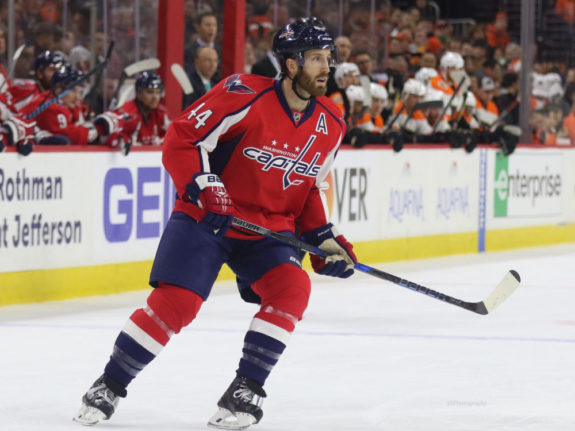
Derek “Turk” Sanderson
Derek Sanderson’s brief 13-game stint with the Penguins in the 1977-78 season still saw him carry a unique nickname, “Turk,” which followed him throughout his six-team NHL career. He disclosed its unusual origin at a 2015 town hall event: During his bantam hockey days, he was tricked into passing the puck to an opponent after hearing someone call his name. To prevent future confusion, he and his teammates were assigned distinct sounds for calling for the puck. Sanderson’s assigned sound was “Gobble, Gobble,” like a turkey, leading to the shortened nickname “Turk.”
Rob “The Piece” Scuderi
Rob Scuderi acquired the nickname “The Piece” in 2009 due to a humorous verbal misstep. During an interview at the 2009 Stanley Cup Final, Scuderi inadvertently described himself as “the missing piece” instead of “a missing piece” of the Penguins’ team puzzle. Teammates Crosby and Malkin found this mistake hilarious and subsequently dubbed him “The Piece.”
Jordan “Gronk” Staal
Jordan Staal, a former Penguins forward and now captain for the Carolina Hurricanes, is an imposing figure at 6-foot-4, 220 pounds. His substantial presence caught the eye of teammate Colby Armstrong, who nicknamed him “Gronk.” This was a reference to the Marvel Comics villain known for superhuman strength and the ability to make objects stick to him – perhaps a playful allusion to Staal’s ability to control the puck.
Kevin “Artie” Stevens
Kevin Stevens and his father, Arthur, shared a unique bond through a nickname, “Artie,” which Penguins players started using for Kevin. This happened after they met his father and observed the striking resemblance in both appearance and personality between the two men. Former teammate John Cullen remarked that “Kevin’s dad was just like him. He was a bundle of joy.”
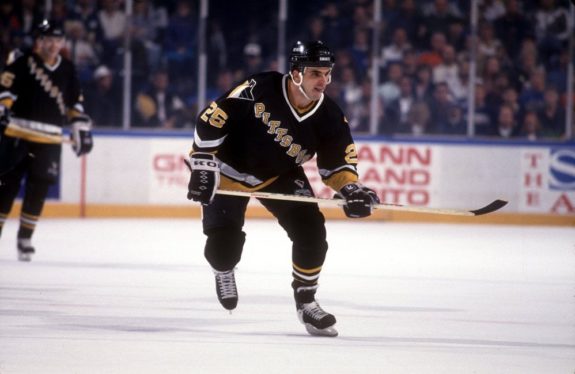
Brandon “Flat Stanley” Sutter
Despite playing for three different NHL teams over a 13-year career, Brandon Sutter’s Penguins teammates nicknamed him “Flat Stanley” not for his travels, but for his exceptionally lean physique. The moniker references Jeff Brown’s Flat Stanley book series, where the protagonist is flattened and mails himself globally for adventures. Sutter reportedly disliked the nickname, preferring “Goose,” after the character in the 1986 film Top Gun.
Self-Appointed Nicknames
Occasionally, players craft their own nicknames, much like musicians adopt stage names or authors use pen names. These self-appointed monikers reflect personal choice rather than external assignment.
Max “Superstar” Talbot
Max Talbot seemed to operate under the philosophy of inventing his own nickname if none were offered. He acquired the moniker “Superstar” after appearing in a series of commercials for A&L Motor Sales. In one commercial, Armstrong suggests A&L treats him well “because of who he is,” to which Talbot retorts, “You? Who are you? I thought they only took care of superstars like me.” This exchange solidified the “Superstar” nickname, which was then featured in subsequent commercials.
Jeff “Tishy” “Mr. Game One” Zatkoff
Former Penguins goalie Jeff Zatkoff remarkably coined two nicknames for himself. The first, “Tishy,” remained mysterious for years until the Penguins’ Twitter account revealed in 2016 that it was a unique word Zatkoff invented, meaning “beauty” (coincidentally, it means “fortunate” in Sanskrit). His second nickname, “Mr. Game One,” emerged during the Penguins’ 2016 Stanley Cup journey. Due to injuries to Marc-Andre Fleury and Matt Murray, Zatkoff started the initial game of the first series against the New York Rangers, securing a win. Although he didn’t play further in the playoffs, after the Cup victory, he playfully initiated a “Mr. Game One” chant in the locker room, hinting at his crucial early contribution.
Fan-Chosen Nicknames
With the rise of social media, fans now possess significant influence in coining nicknames for their favorite players. Although not as formally adopted as locker room monikers, these fan-generated names could gain widespread traction through strategic online engagement.
Nick “Jughead” Bjugstad
Given the phonetic challenge of ‘Bjugstad,’ fans creatively derived “Jughead” – borrowing ‘Jug’ from his name and linking it to the iconic Archie Comics character, Jughead Jones. This connection is further amusing given Jughead Jones’s famously insatiable appetite, echoing Bjugstad’s own ‘Rotisserie Chicken’ incident.
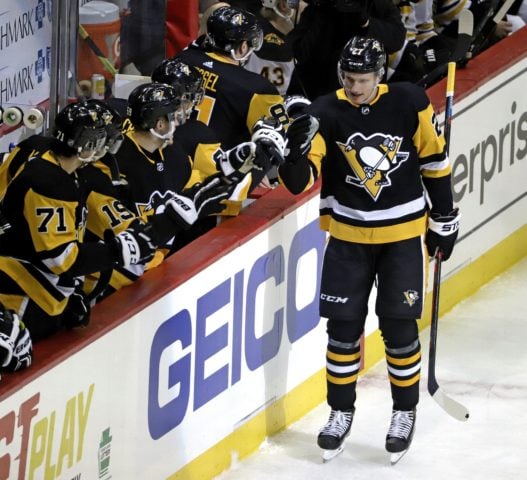
Teddy “Boogie Woogie Blueger Boy” Blueger
Teddy Blueger proved a valuable asset for the Penguins, and his impact deserved a memorable nickname. “Boogie Woogie Blueger Boy,” a playful nod to The Andrews Sisters’ 1941 World War II song, offers a distinctive and catchy moniker.
Johan “Moose” Hedberg
Even pre-dating the Twitter era, Johan Hedberg acquired a fan-bestowed nickname, “Moose,” upon joining the Penguins in the 2000-01 season. Having recently played for the AHL’s Manitoba Moose, Hedberg sported a helmet adorned with a prominent moose illustration in his debut Penguins game. Fans quickly picked up on this distinctive imagery, and the nickname “Moose” stayed with him throughout his tenure in Pittsburgh.
Mark “The Test Tube” Letestu
Mark Letestu’s distinctive fan nickname, “The Test Tube,” partly stemmed from NBC Sports and local Penguins announcers whose pronunciation of his surname often sounded like the phrase. The origin is thus shared between the broadcasters and the fans who adopted it.

Jordan “Shorty Jordy” Staal
The nickname “Shorty Jordy” for Jordan Staal doesn’t refer to his stature – a humorous contrast to “Gronk” – but rather his remarkable achievement of scoring seven short-handed goals in his 2006-07 rookie season with the Penguins. This feat earned him a Guinness World Record for the most short-handed ice hockey goals by a rookie in a single season.