

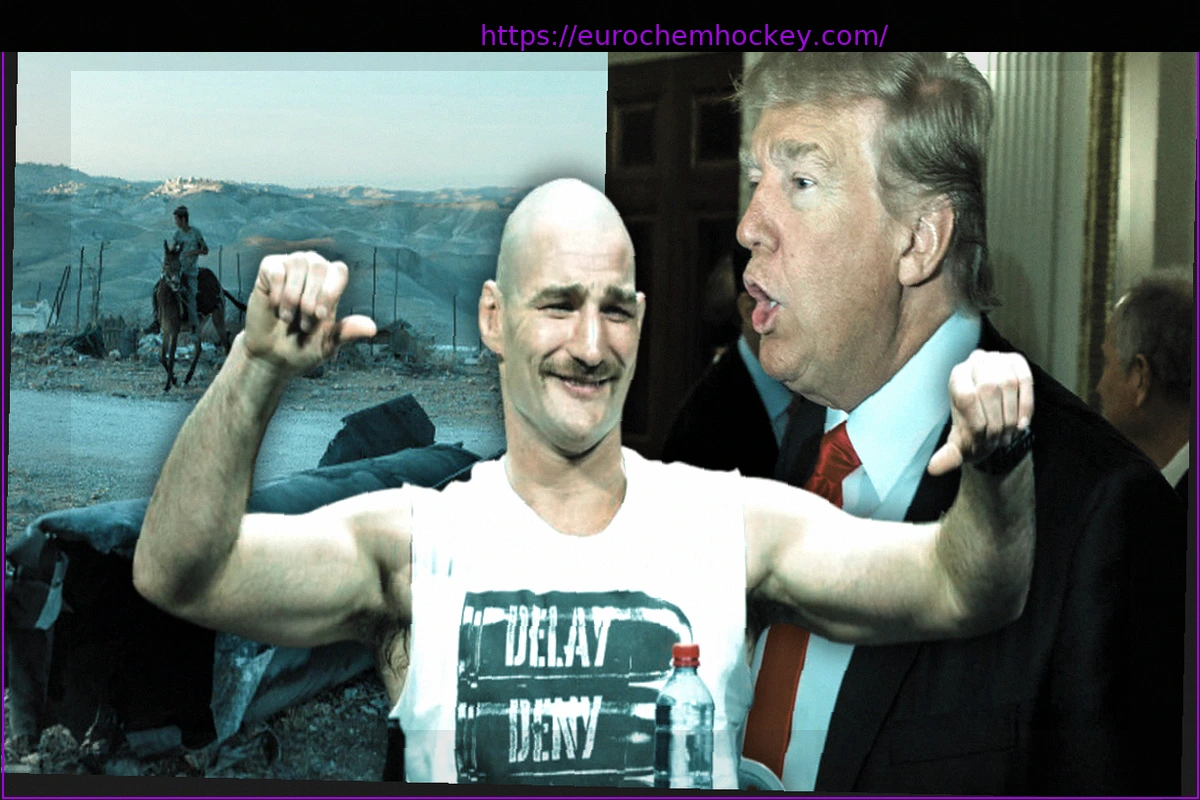
Former UFC middleweight champion Sean Strickland has utilized his social media platform, X, to consistently criticize President Donald Trump’s approach to the ongoing conflict with Iran. Strickland argues that this war disproportionately burdens working-class Americans while simultaneously pushing the region closer to a potentially catastrophic escalation. His public statements resonate with widespread concerns about an open-ended conflict that has already disrupted global energy markets, fueled inflation, and created a dangerous nuclear standoff between Washington and Tehran.
Strickland’s Sharp Critique of Donald Trump’s Iran Policy
Strickland’s criticism extends beyond a singular outburst, forming a coherent populist argument against the war’s underlying justifications and its financial toll. In one notable post, he controversially suggested that “the only way Trump will get his way in Iran is if he puts a bullet in the head of every Iranian,” subsequently listing U.S. demands for Tehran to cease missile development, halt support for proxy groups, and end uranium enrichment. These demands mirror long-standing “red lines” established by the U.S. and Israel regarding Iran’s military and nuclear activities. He then questioned, “At this point what are you trying to accomplish?”, challenging the ultimate goal of a campaign that has already involved extensive strikes on Iran’s nuclear and military infrastructure.
In another post, Strickland advocated for a policy where “it needs to be standard practice of leaders to send their children to war,” a remark clearly aimed at highlighting the perceived disconnect between decision-makers in Washington and the troops deployed to the Persian Gulf. He further asserted that Trump had “completely betrayed the blue collar guys with Iran,” directly linking the conflict to increased fuel, shipping, and living expenses for average Americans. This viewpoint is supported by real-world economic indicators: tanker rates for shipping from the Middle East to Asia have quadrupled since the conflict escalated, and global oil and gas prices have surged due to disruptions in shipping through the crucial Strait of Hormuz.
The Economic Toll: War, Hormuz, and the “Blue Collar” Burden
The backdrop to Strickland’s social media commentary is a conflict that has severely impacted one of the world’s most vital energy chokepoints. Since Iran’s attacks on ships and regional energy facilities, tanker traffic through the Strait of Hormuz has dramatically decreased from approximately 24 crude carriers per day to just four, leaving hundreds of loaded vessels idling near key hubs like Fujairah. Analysts estimate that roughly 20 percent of the global supply of oil and liquefied natural gas typically transits this corridor. This disruption has directly contributed to higher pump prices, increased freight costs, and elevated power bills for consumers across the U.S., Europe, and Asia.
These economic pressures are now evident in macroeconomic forecasts, underscoring Strickland’s focus on everyday living costs. The OECD anticipates U.S. inflation to reach about 4.2 percent this year, a figure higher than earlier projections, and specifically warns that the Iran conflict is a significant driver due to its impact on energy prices.
Nuclear Risks and Trump’s Ultimatum
Strickland also expressed deep skepticism regarding official justifications centered on Iran’s nuclear program, stating that “no one has made a logical case for Iran besides ‘trust me bro’.” He questioned how Iran “funding random groups with AKs” or the specter of “nukes” actually improves life for Americans who have purportedly heard similar warnings for “20 years.”
His skepticism comes at a time when Iran’s nuclear program is once again under intense scrutiny and faces military actions. U.S. and Israeli airstrikes in 2025 reportedly damaged or destroyed multiple Iranian nuclear sites. However, satellite imagery and expert assessments indicate that Tehran is actively rebuilding facilities, such as the Taleghan 2 complex at Parchin, and continuing work at other undisclosed locations. Recent attacks near the Bushehr nuclear power plant and the heavy-water production site at Khondab even prompted rare public expressions of alarm from the International Atomic Energy Agency (IAEA).
Trump’s Dire Warning: “A Whole Civilization Will Die Tonight”
Adding to these nuclear and economic tensions is President Trump’s own fiery rhetoric, which has fueled fears of a larger-scale catastrophe. The president has issued a strict deadline, set for 8 p.m. Eastern, demanding that Iran reopen the Strait of Hormuz. He has threatened “total destruction” of bridges, power plants, and other critical infrastructure if no agreement is reached. In a statement that reverberated through global media, he warned that “a whole civilization will die tonight” if Tehran refuses to yield, a threat Iranian leaders have met with vows to resist, even at the cost of millions of lives.
Commentators frequently describe the UFC as a vital platform for Trump’s political message, offering a direct conduit to young male voters. Consequently, any high-profile fighter breaking ranks and criticizing a war that Trump is marketing as essential for national security represents significant dissent within what was once considered one of his most secure sporting arenas.
Kharg Island: A New Flashpoint and Economic Consequence
Kharg Island has emerged as another critical flashpoint in the conflict, directly feeding into the economic grievances articulated by fighters like Strickland. In recent weeks, the U.S. has conducted multiple “large-scale precision strikes” on the island, targeting over 90 Iranian military objectives, including naval mine depots, missile bunkers, air defenses, and a naval base. Officials have consistently stressed that oil and gas terminals have, so far, been spared, even during new raids confirmed on April 7.
Washington frames its actions on Kharg Island as a strategy to hinder Iran’s capacity to threaten shipping in the Strait of Hormuz without destroying the primary export hub for Iranian crude oil. This delicate, high-stakes approach keeps global markets on edge and adds another layer to the question of what this war truly accomplishes for ordinary citizens grappling with rising fuel bills.
It is within this complex context that an active UFC champion is pressing the president for clear explanations of how this war genuinely benefits the people who are experiencing its financial impact through higher fuel prices, shipping invoices, and monthly utility bills.
Strickland’s outspoken political comments coincide with his return to the sport’s upper echelons, with another high-stakes fight already scheduled. Fresh off a third-round stoppage victory over Anthony Hernandez in February, he is slated to challenge the reigning middleweight champion Khamzat Chimaev in the main event of UFC 328 on May 9 at the Prudential Center in Newark. This matchup will pit his aggressive, forward-moving striking style against one of the division’s most dominant wrestlers.
In a post on X, Strickland had specifically highlighted this economic impact, stating: “Trump completely betrayed the blue collar guys with Iran. What has this cost the average guy. Gas? Shipping? Inflation? 1000 to 2000? How much more by the time this is done? Rich get richer and poor get poorer. Complete betrayal…”