

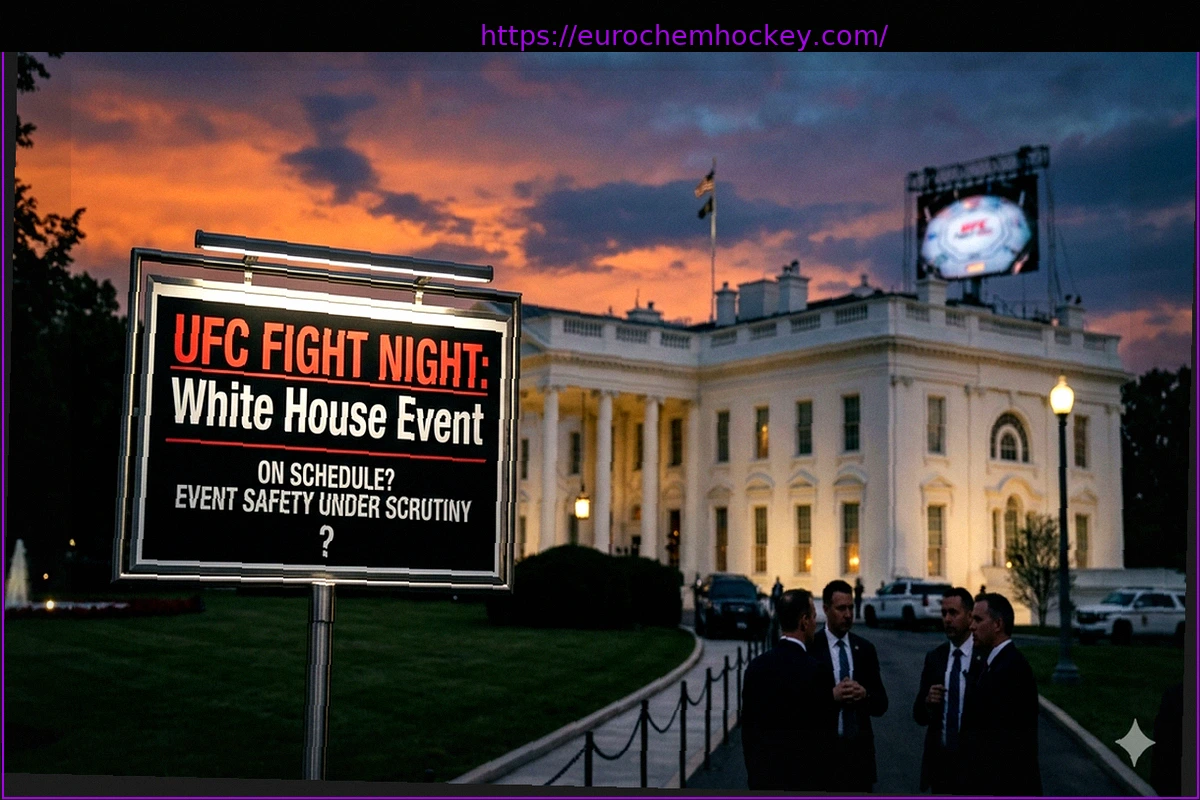
Plans for a landmark UFC fight card on the White House South Lawn in June 2026 have sparked considerable excitement among enthusiasts. However, given the ongoing military conflict between the United States and Iran, there’s a growing debate: can this event realistically proceed, and if so, would it be secure?
A Symbolic and Historic Sporting Spectacle
Dubbed “UFC Freedom 250,” the event is slated for June 14, 2026, aligning with Flag Day and President Donald Trump’s 80th birthday. The fight card is anticipated to include approximately six bouts, notably a lightweight title match between Ilia Topuria and Justin Gaethje. Access to the South Lawn will be restricted to about 5,000 invited attendees, with additional viewing zones available nearby for thousands of other fans.
Should it go ahead as planned, this would mark the first professional sporting competition ever hosted at the White House, intended as a grand celebration of the United States’ 250th anniversary.
The Geopolitical Challenge: Conflict with Iran
The geopolitical landscape has shifted significantly since the initial proposal for this event. In late February 2026, the U.S. and Israel initiated strikes against Iran, triggering an escalating conflict characterized by missile and drone attacks throughout the region.
This evolving reality has fueled apprehension among experts, fans, and even members of the UFC broadcast team. During a recent podcast, commentator Joe Rogan characterized the notion of hosting a significant fight event at the White House amidst wartime as “extremely high security and strange,” emphasizing the inherent risks of gathering thousands of prominent individuals in a single location.
Public anxiety is also on the rise. A recent survey indicated that 77% of Americans consider a terrorist attack within the U.S. at least somewhat probable due to the Iran conflict, underscoring widespread unease about large-scale public assemblies.
Unprecedented Security Measures Required
Should the UFC event proceed, it would likely attain a status akin to a National Special Security Event, a classification reserved for high-stakes occasions such as presidential inaugurations or significant international summits. Under these stringent protocols, the U.S. Secret Service would spearhead security operations, while the FBI would manage counter-terrorism intelligence and investigations.
The White House is already renowned as one of the most heavily fortified locations globally, boasting multi-layered defenses that encompass:
- Strictly controlled airspace and sophisticated anti-drone technologies.
- The presence of numerous federal law enforcement agencies.
- Integrated military surveillance and coordinated air defense systems.
- Rigorous screening processes and managed access points for all attendees.
Nevertheless, hosting a large-scale outdoor sporting event at the presidential residence presents unique challenges, likely necessitating additional security perimeters, expanded airspace restrictions, and intensified surveillance efforts.
Assessing Credible Threats
To date, U.S. officials have reported no specific threats directly targeting the UFC event. While authorities recently investigated intelligence concerning a potential Iranian drone threat within the U.S., officials subsequently clarified that the information was unverified and not linked to any confirmed plot.
Despite this, experts caution that highly symbolic, public events held during wartime inherently elevate perceived risks, even in the absence of an immediate, credible threat.
Potential Postponement or Cancellation
Currently, neither the UFC nor the White House has announced any intentions to postpone the event. Planning remains underway, and the full fight card has already been unveiled.
Nonetheless, several critical factors could still influence the event’s eventual execution:
- Further escalation of the U.S.–Iran conflict.
- The emergence of credible intelligence regarding a security threat.
- Unforeseen logistical or regulatory challenges.
- Political implications concerning the public perception during wartime.
Concluding Thoughts
From a technical standpoint, the event could proceed safely if security agencies assess the risks as manageable. The White House is widely considered among the most secure locations globally.
However, politically and symbolically, hosting a large-scale sporting spectacle at such a venue amidst an active international conflict is both unconventional and potentially contentious.
For the time being, the UFC White House event remains scheduled. Yet, as the conflict with Iran develops, the final decision will likely hinge on thorough security assessments conducted in the months preceding the event.