

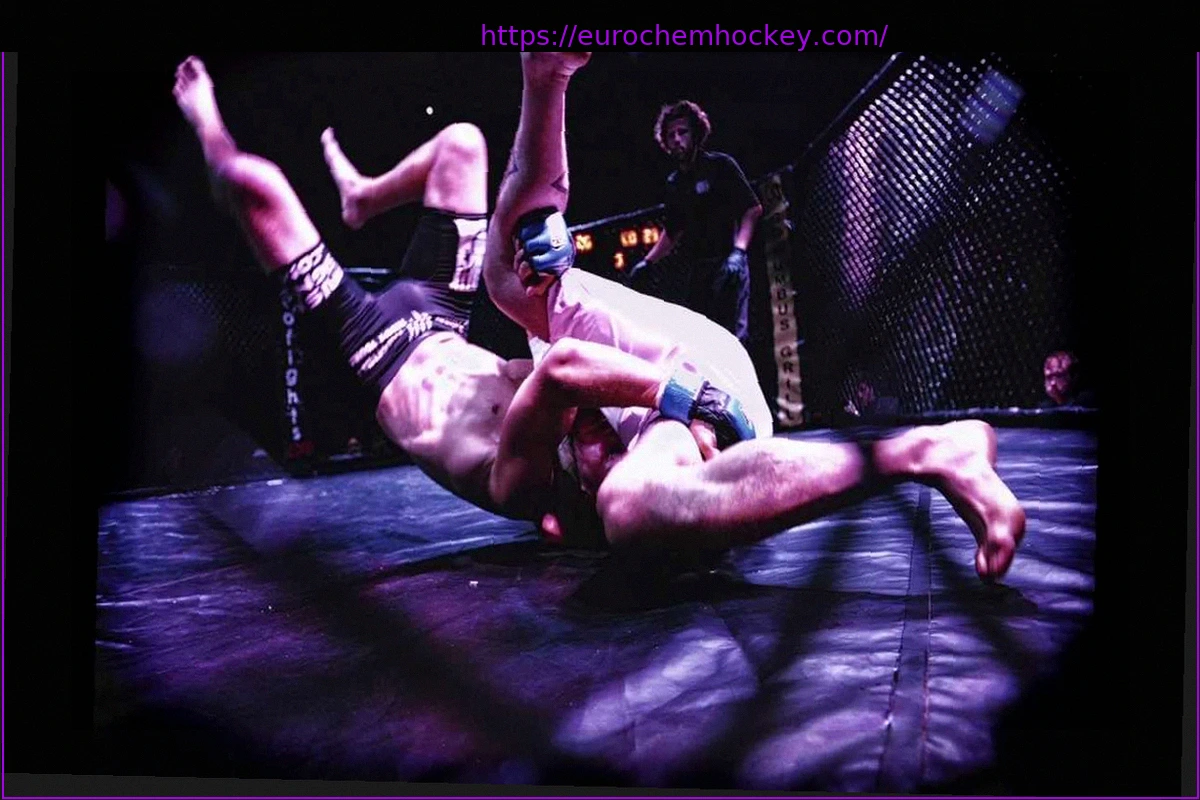
The concern that mixed martial arts (MMA) might mirror boxing’s recent embrace of spectacle-driven, “freak show” matchmaking is no longer a future possibility; it’s already happening, albeit in a more fragmented manner.
Boxing has shed any pretense of avoiding such bouts. Jake Paul’s December 2025 fight against Anthony Joshua, a crossover mismatch that would have seemed satirical just years prior, captivated 33 million global viewers on Netflix. Similarly, Oleksandr Usyk’s upcoming WBC heavyweight title defense against kickboxing star Rico Verhoeven in May, set against the backdrop of the Pyramids of Giza, exemplifies the kind of “you’ve got to be kidding me” booking that modern boxing now considers premium content rather than a cause for embarrassment.
However, MMA has never been as purely athletic as some may recall. Early UFC years were characterized by unbridled, style-versus-style chaos, with minimal rules, few weight classes, and a “freak show” energy that the polished modern product now disavows. The Fedor Emelianenko vs. Hong Man Choi bout serves as a prime example of the entertaining, albeit unconventional, matchups of that era. Thus, the inclination towards such bookings is not a new affliction but rather a part of MMA’s inherent history.
The Shifting Business Landscape
What has evolved is the surrounding business climate. Previously, MMA confined such impulses to the fringes, seen in PRIDE curiosities, Bellator’s nostalgic picks, or the occasional hybrid-rules experiment. Now, the incentives are greater, the platforms are broader, and the available talent for these types of matchups possesses significantly more commercial appeal. The most striking illustration of this trend is the announced return of Ronda Rousey to MMA this May to face Gina Carano, headlining Netflix’s inaugural live MMA broadcast for Jake Paul’s Most Valuable Promotions. By March, the event also featured Francis Ngannou vs. Philipe Lins and Nate Diaz’s return to MMA. This indicates an industry actively cultivating spectacle, not avoiding it.
Beneath the marketing jargon lies a straightforward business logic: a promoter’s primary objective is not to safeguard the sport’s integrity, but rather to generate revenue. In this context, combat sports matchmaking can resemble playing online casino slots, hoping for a confluence of favorable symbols to hit the jackpot. Rousey, Carano, Netflix, Ngannou, Diaz, Perry – by aligning enough recognizable figures, the hope is that the audience and the revenue will follow, irrespective of the purity of the sporting contest. Boxing has openly embraced this mentality, and MMA, particularly outside the UFC, is increasingly adopting a similar casino-like approach.
The UFC’s Incentives to Resist
This doesn’t portend the complete transformation of the entire sport into a traveling circus. The UFC’s success remains intrinsically linked to promoting legitimacy, rankings, title implications, and the significance of career progression. While Dana White may vocally criticize boxing promoters, his very critique highlights the UFC’s strategic positioning as a more organized and credible alternative to the chaotic boxing market. An organization that built its brand on sporting order is unlikely to permanently transform the Octagon into a venue for novelty acts, not due to moral superiority, but because its brand identity is rooted in a different form of control.
The challenge lies in the fact that MMA is not solely defined by the UFC. The question of “destiny” is therefore crucial. One Championship has already experimented with mixed-rules bouts, such as Demetrious Johnson vs. Rodtang, which some viewed as a return to the sport’s original experimental spirit. KSW leaned heavily into pure spectacle with Eddie Hall’s quick victory over Mariusz Pudzianowski, fueling Hall’s subsequent desire to face “freaks” rather than pursue traditional rankings. The market clearly demonstrates a substantial audience for such entertainment.
Fans Also Play a Role
Consequently, the pertinent question is not whether MMA will feature “freak show” fights – it always will – but rather who will dictate the proportion of the calendar they occupy. If the UFC maintains its discipline, it can likely preserve the perception of legitimacy at the sport’s highest level. However, if high-profile, Netflix-style cards continue to achieve significant viewership, if Jake Paul’s promotional strategies increasingly influence MMA, and if rival promotions find that celebrity clashes generate attention more rapidly than developing contenders, the fringes of the sport will undoubtedly become more unconventional and boxing-like.
This evolution may not be entirely negative. Combat sports have always possessed an element of the sideshow. Fans are not passive observers in this dynamic; they may decry “freak show” fights, only to become engrossed when trailers are released, sparking debates about an aging legend’s capabilities, an underdog’s knockout potential, a fighter’s conditioning, or a boxer’s ability to defend against takedowns. This engagement is tied to the enduring “what if?” narrative, a potent selling point that rivals title fights in its effectiveness and ensures the continuation of such matchups.
The Obvious Jackpot
Therefore, while MMA is not entirely fated to become a full-fledged replica of boxing’s current trajectory, significant portions of it are undeniably poised to adopt its playbook. The financial incentives are substantial, the platforms are eager, and the available personalities are highly marketable. The only uncertainty lies in the extent to which the sport will be drawn into this orbit and at what pace. Boxing has already demonstrated the consequences when promoters prioritize the “jackpot” over the integrity of the fight card. MMA may not have fully reached that point, but it is sufficiently close to sense the momentum.