

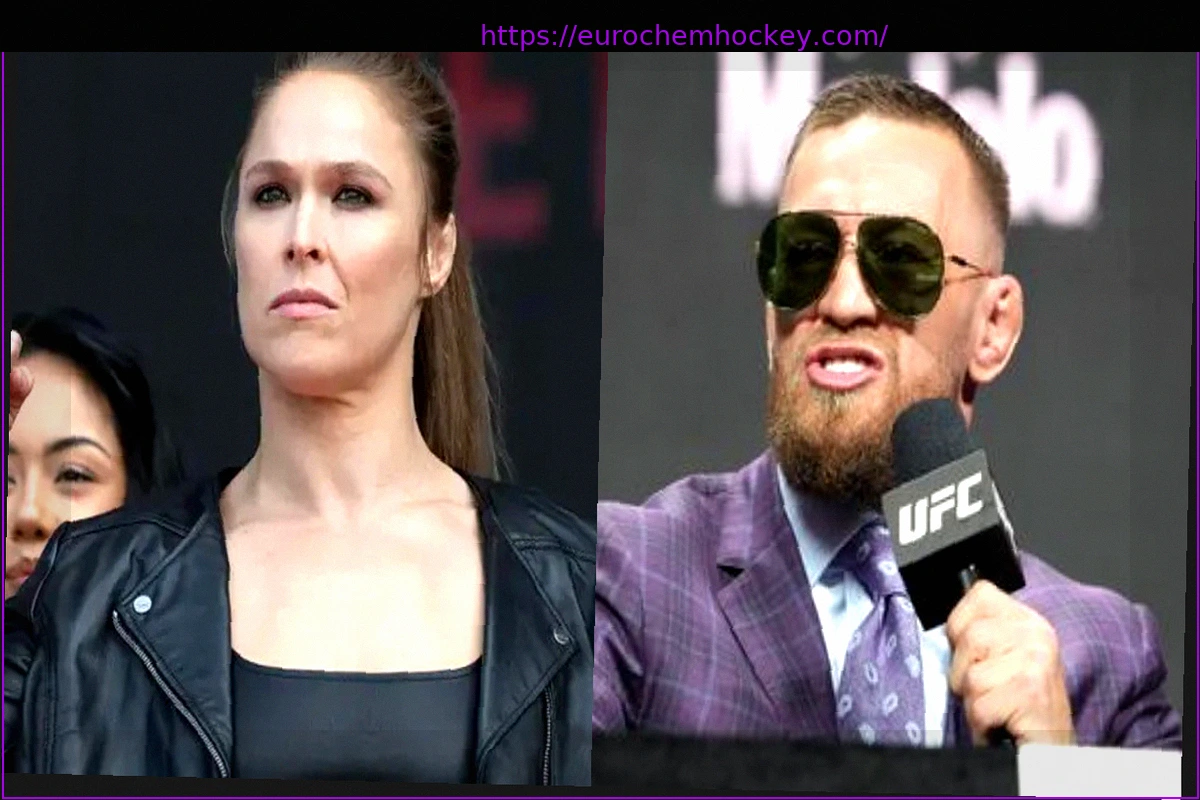
Last weekend saw a strategic battle for audience attention between Ronda Rousey’s Netflix MMA debut and Conor McGregor’s highly anticipated UFC return announcement. While Netflix streamed its first live MMA event featuring Rousey against Gina Carano, the UFC countered by announcing McGregor’s comeback fight against Max Holloway for UFC 329 on July 11. This led to a weekend-long debate about who truly captured public interest, with data revealing a complex picture.
On Sunday morning, May 18, two major events vied for the same audience: a swift 17-second fight on Netflix and an eight-word announcement on X that ended a five-year wait. Google Trends data offers insights into this attention war.
Ronda Rousey’s Quick Victory on Netflix
Ronda Rousey returned to mixed martial arts on May 16 at the Intuit Dome, with her bout against Gina Carano, who hadn’t fought in 17 years, streamed live on Netflix. The fight concluded in just 17 seconds via armbar, with Carano submitting almost immediately to Rousey’s signature move.
Conor McGregor’s UFC Return Announced
On the same evening, the UFC officially declared Conor McGregor’s return to face Max Holloway at UFC 329 on July 11 in Las Vegas. The timing of this announcement was seen as a direct response to the MVP event. Jake Paul, a co-owner of MVP, criticized the UFC’s move as a sign of insecurity.
Google Trends Data Reveals Search Interest
According to Google Trends data for the United States between May 11 and May 18, Ronda Rousey’s search interest peaked at the maximum indexed value of 100 in the early hours of May 17, immediately following her fight. In contrast, Conor McGregor’s search interest during the same period reached only 9. Gina Carano, despite her long layoff, garnered a peak search interest of 75, while Nate Diaz, also featured on the card, peaked at 27.
Google Trends measures search interest on a scale of 0 to 100, with 100 representing the highest search volume for a term within a given timeframe and region. A score of 100 for Rousey and 9 for McGregor indicates that Rousey received approximately 11 times more searches than McGregor.
Geographically, Rousey dominated search interest in English-speaking markets. She commanded 89% of the combined search share with McGregor in the US and Canada, 81% in Australia and South Africa, and 77% in the UK. McGregor’s search share was highest in Tajikistan (83%) and Turkmenistan (84%), while in his home country of Ireland, Rousey still held a slight edge at 53% to 47%.
Notably, the top trending search related to McGregor was “Conor McGregor vs Max Holloway tickets,” which surged by over 4,900%. Intriguingly, “Rousey vs Carano” and “Ronda Rousey vs Gina Carano” also appeared as rising terms within McGregor’s Google Trends data, indicating that even those searching for McGregor were also looking up information about the MVP event.
Search vs. Passive Consumption
The data suggests that Rousey’s event generated active search behavior, with people actively seeking information and results. McGregor’s announcement, on the other hand, was largely consumed passively through media alerts and social media posts. While both methods create reach, active searching translates into measurable Google traffic, explaining McGregor’s lower search volume despite widespread media coverage.
Social Media Buzz Favors McGregor
On social media, the narrative shifts towards McGregor. His post on X, “you’re gonna respect on my motherf***ing name,” went viral, along with Holloway’s response. UFC 329 trended on Google on May 17, though Rousey’s individual search volume still surpassed it.
In conclusion, Rousey significantly outperformed McGregor in terms of US search volume, with nearly every fighter on her card garnering more searches than him. However, McGregor’s announcement dominated mainstream news and social media conversations. For business momentum, the picture is less clear: Rousey has retired, MVP’s viewership figures are unconfirmed, and McGregor’s return is highly anticipated for a future pay-per-view event.
Dave Meltzer’s Insights
Boxing journalist Dave Meltzer noted that the Rousey vs. Carano event was listed as a movie on Netflix, ranking sixth globally in that category on its first day. While viewership numbers are not definitively gigantic, it held the number one spot for movies in the US, Canada, and Mexico. In contrast, the UFC’s own event on Paramount saw lower than usual viewership.
Another trend analysis indicated that searches for Rousey and Carano significantly outpaced those for McGregor, Francis Ngannou, Tyson Fury, and Travis Browne.
Platform and Generational Divide
The differing engagement patterns suggest a division in the audience, likely along platform and generational lines. Netflix attracted a more casual, mainstream audience who may not follow MMA regularly but were drawn in by Rousey’s name recognition. These viewers required external searches to identify fighters and event details.
McGregor’s existing fanbase, however, was already engaged. They did not need to search for him, as they were actively following the announcement and ensuing social media exchanges.
Ultimately, the weekend can be characterized as a split decision: Rousey won the battle for search interest, while McGregor captured the mainstream news cycle and social media buzz.